
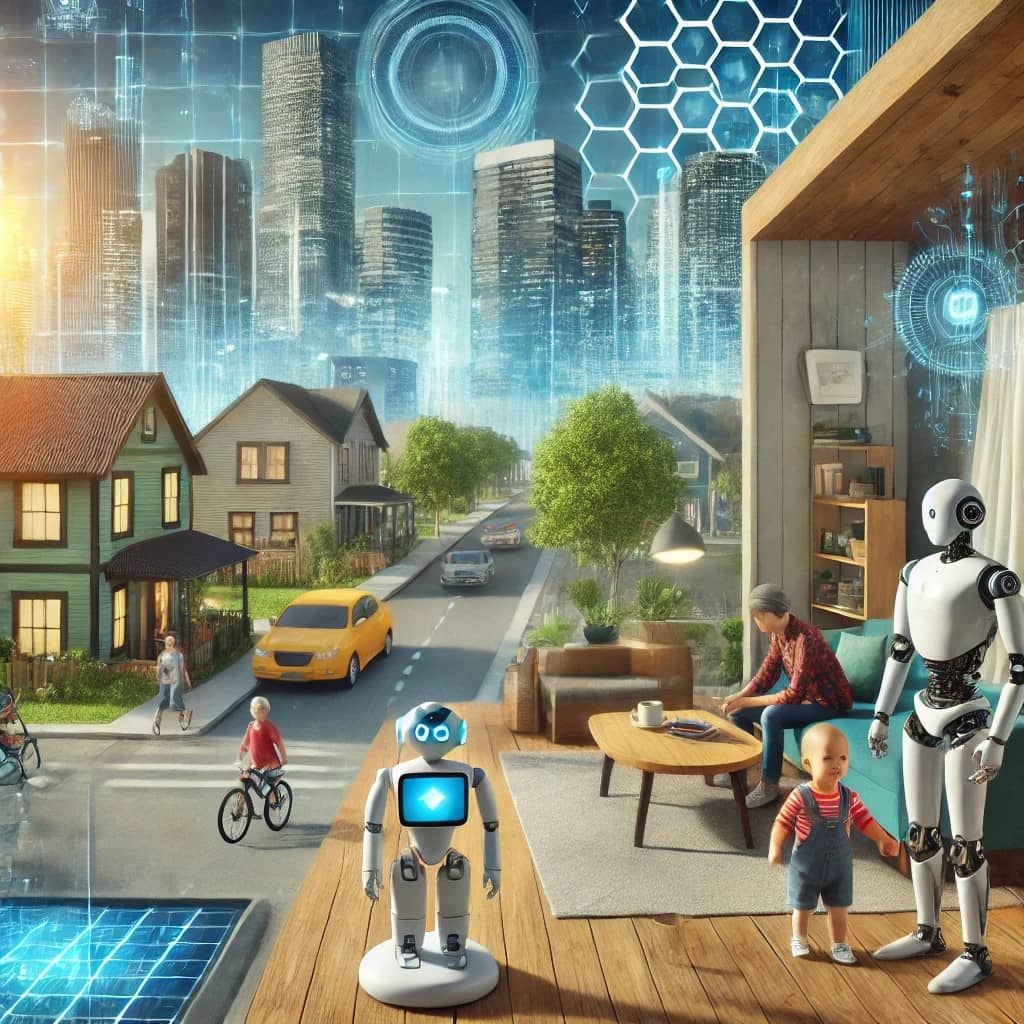
Introduction
Artificial Intelligence (AI) is no longer a futuristic concept; it’s a reality that is transforming how we live, work, and interact with the world around us. From personal assistants like Siri and Alexa to advanced AI models powering self-driving cars, the influence of AI on daily life is undeniable. As technology advances, AI is poised to bring even more groundbreaking changes. But what exactly does the future of AI hold, and how will it shape our world?
AI in Healthcare
One of the most promising applications of AI is in the healthcare sector. AI can analyze vast amounts of data, aiding in faster and more accurate diagnoses. Machine learning algorithms can detect patterns in patient data, predicting diseases like cancer or heart conditions before they become life-threatening. In the future, AI-powered robots may even assist in surgeries, making procedures more precise and less prone to human error.
AI and Automation
Automation is another area where AI is making significant strides. In industries like manufacturing and logistics, AI-driven machines and robots are increasing efficiency, reducing the need for manual labor. Automated vehicles, such as delivery drones and self-driving trucks, are also expected to become more prevalent, potentially transforming how goods are transported. While automation brings tremendous efficiency, it also raises concerns about job displacement, a challenge that society will need to address.
AI in Smart Homes
Smart homes are becoming more advanced with the integration of AI. Devices powered by AI can learn user preferences, automating tasks like adjusting the thermostat, controlling lighting, or even preparing meals. Voice-activated AI assistants like Google Home and Amazon Echo are becoming commonplace, streamlining home management and making everyday tasks more convenient.
AI in Entertainment and Creativity
The entertainment industry is already experiencing the influence of AI, from personalized movie recommendations on streaming platforms to AI-generated music and artwork. AI algorithms can analyze user preferences to suggest content that aligns with their tastes, providing a highly personalized entertainment experience. In the future, AI might even play a more active role in the creative process, assisting artists, musicians, and filmmakers in creating new works.
Challenges and Ethical Considerations
Despite the exciting potential of AI, its rapid development also raises several ethical concerns. Issues such as data privacy, bias in AI algorithms, and the potential for misuse are critical topics that need to be addressed. As AI continues to evolve, ensuring its ethical use will be paramount to prevent negative consequences.
Conclusion
AI is undoubtedly one of the most transformative technologies of our time. While it offers numerous benefits and exciting possibilities, its development must be carefully managed to ensure that society reaps the rewards while minimizing risks. The future of AI is bright, but it’s up to us to guide it responsibly.
Let me generate a featured image for your blog.